TREKKING IN THE LOWER RWENZORIS
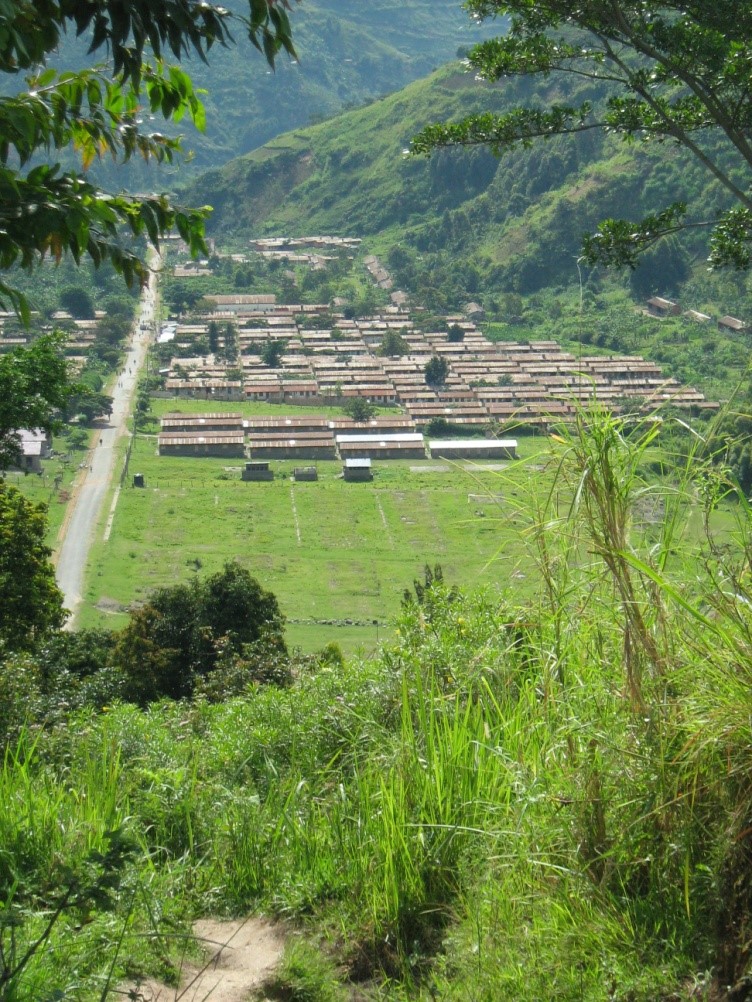
(Fig i – showing the tarmac road from Trekkers base camp [out of picture] and the track up the hill). The houses were originally the workers’ accommodation at the Kilembe mining camp.
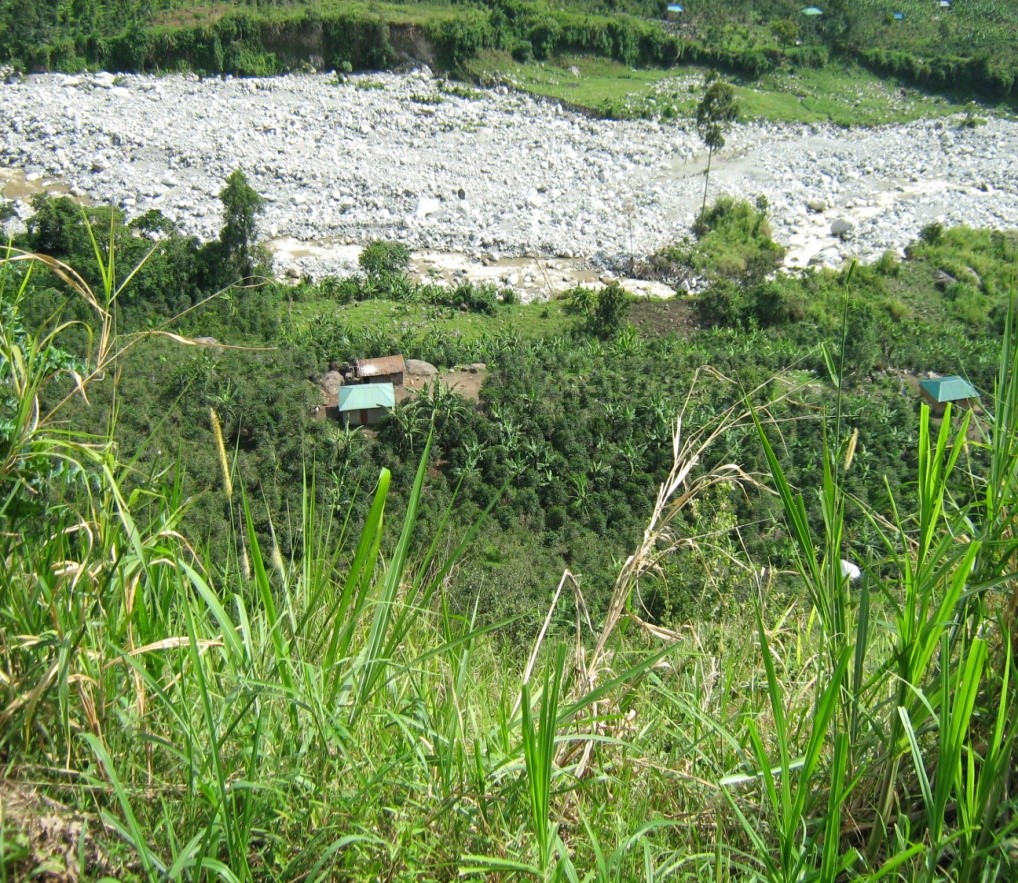
Fig ii. An almost sheer drop down into the river valley. The massive damage was caused by thousands of boulders and rocks being washed down from the higher elevations in the great El Nino storms.

Fig iii

Fig iv

Fig v

Fig vi
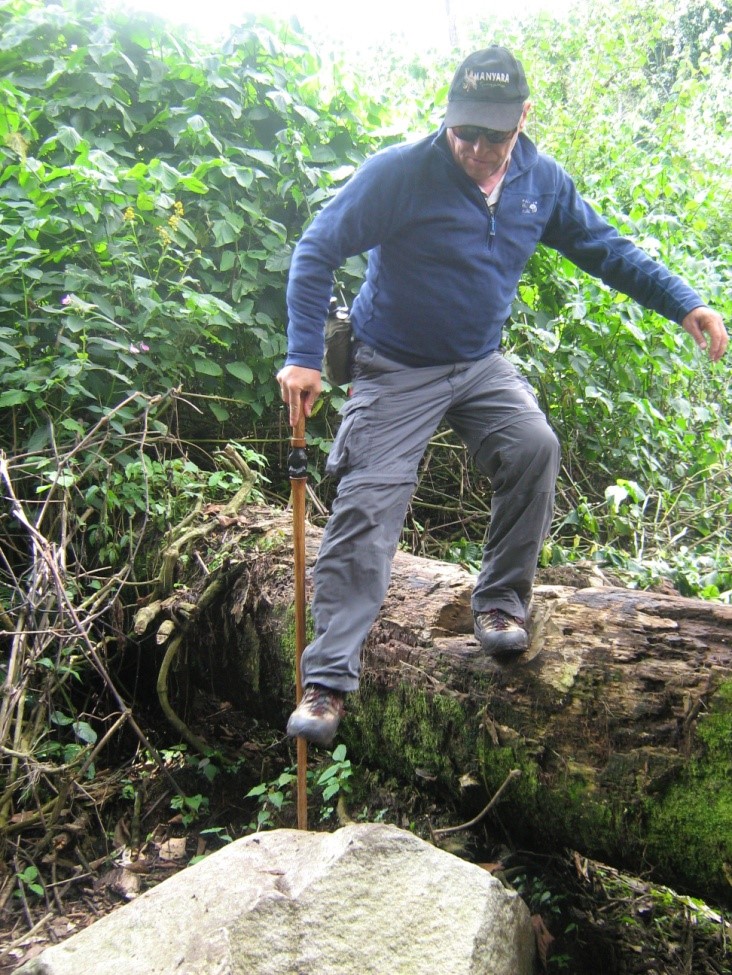
Fig vii
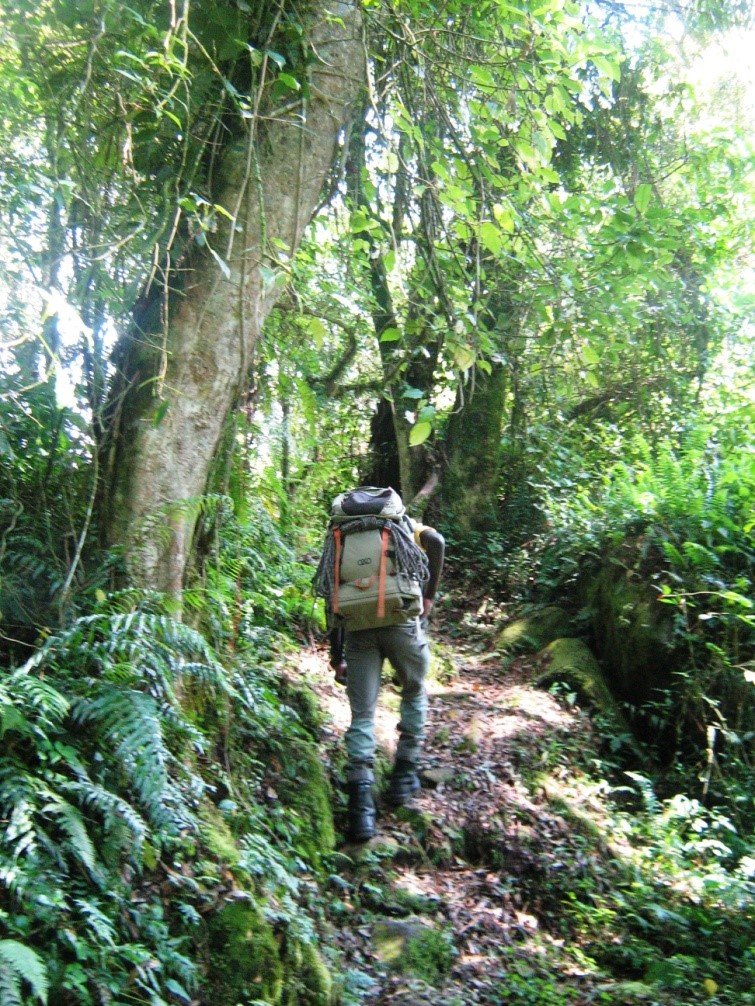
Fig viii
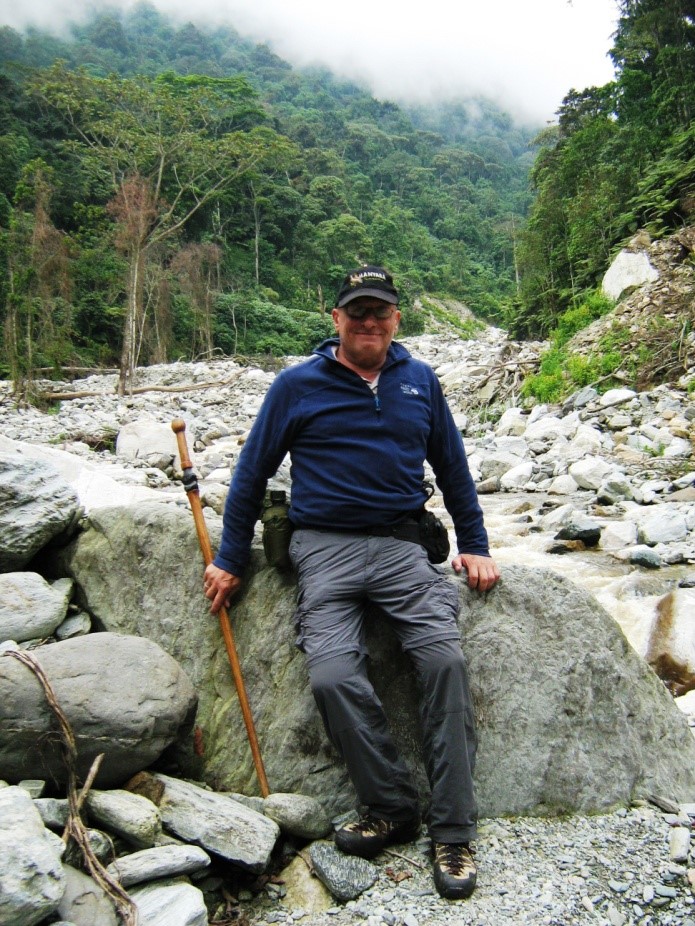
Fig ix
RECOMMENDATIONS:
The following is required as a minimum for the Forest Trek and the 3-day trek (and also forms the essential basic clothing and kit requirements for the higher altitude and summit climbs).
CLOTHING AND FOOTWEAR:
- 2 x pr trekking trousers (with zip off legs if no shorts are brought along)
- 1 x pr shorts (or see above)
- 2 x lightweight shirts
- 1 x cotton tee shirt (for in camp)
- 1 x cotton under-vest
- 1 x long-sleeved lightweight fleece vest
- 1 x good quality shell jacket (mountain jacket – Gore-Tex or some brand of breathable, 4-season waterproof jacket with hood)
- 1 x heavyweight fleece jacket (preferably one that twins with and zips into the shell jacket)
- 1 x pr of proper, quality mountain trekking/walking boots (Gore-Tex or other waterproof, breathable 3-season or 4-season high ankle boots – well broken in. Addidas- or Nike-type outdoor trainers are not sufficient)
- 1 x pr Gore-Tex or waterproof knee-length gaiters (the zip-up type that hook over and seal the boots)
- 1 x pr waterproof trekking trousers (with zip legs to provide easy putting on or removal without taking off boots)
- 2 x pr seamless walking socks (seamless to avoid blisters)
- 1 x pr gloves (ski gloves or similar)
- 1 x balaclava (ski mask) or scarf
- 1 x hat
- 1 x pr trainers or sandals (for camp or vehicle)
(pack clothing separately in plastic bags [e.g. socks and underwear in one; shirts trousers in another, etc] before placing all into a waterproof liner in the rucksack… and stow with ease of access in mind – e.g. essential or quick access things at the top – night clothes and sleeping bag at the bottom).
KIT:
- 35-40 litre main rucksack (take all necessary/essential kit you need – but do not overload oneself or ones porter!)
- 15-20 litre day sack (for carrying clothing/snacks/camera, etc needed on the trek (unless the porter carrying main rucksack is nearby)
- Camel-Bak water bladder or a belt-suspended canteen or bottle holder (one needs to be ‘hands-free’; and carrying water bottles by hand can prevent this)
- Trekking pole or bamboo/wooden staff
- Sun block
- Insect repellent
- Head-torch and/or flashlight
- Sleeping bag and liner
- Kip mat
FOOD AND DRINK:
Even if one does not have special dietary requirements, it is recommended that an order is placed in advance for ones preferred food and a note of what one does not eat.
Because the food supplied for the trek is purchased locally, it may not be of the quality one would expect. Porters carry enormous weights in food and cooking materials – canned food, sacks of potatoes, sacks of charcoal or bundles of firewood, and litres of cooking oil, etc. While that is their job and they are used to it, it might be better for one to suggest in advance via the booking agent lighter or more portable supplies. If one is coming from abroad, I would highly recommend some brand of Meals-Ready-To-Eat (MREs), which can be sourced from many camping/climbing outfitters and adventurous activity shops (and also on-line). One knows one will get good quality and balanced meals of ones choice and eliminate the chance of a runny tummy! MREs are also very light and easy to pack.
ENERGY AND SUSTAINABILITY:
It is essential to carry on the person or in the day sack for easy access a selection of boiled sweets [candy]/Kendal Mint Cake/energy bars/ dried fruit, etc. Eat to get a boost of energy when getting weary or tired.
Carry a couple of litres of water on ones person with extra water in the main rucksack. One must drink an absolute minimum of 3 litres of water per day on climbs up to 3000m (even in cold weather). This should be increased by at least 1 litre per 1000m per day. Supplement but do not replace fluid intake with tea and sodas and other liquids, such as soup.
FIRST AID AND EMERGENCY KIT:
Mountain weather and conditions – even at lower altitudes – can change from sunny and pleasant to anything from uncomfortable to hostile to treacherous. Although the Ruwenzori Trekkers Guides are equipped with first aid kits and can provide some emergency care or rescue, I personally would never go on any mountain – guided or not – even short-duration, low altitude climbs – without the following:
- Personal but comprehensive first aid kit (inc. personal medication, plasters for blisters and cuts, painkillers, anti-inflammatory, anti-bacterial and anti-biotic tabs or caps, water purification tabs, etc
- Deep-Heat or similar penetrating muscle heat rub
- Oral rehydration Salts (OHS)
- Extra water
- Emergency blanket (foil)
- Knife or quality multi-tool
- Spare batteries for torch/camera/GPS, etc.
PREPARATION:
- Before commencing the trek, while still at base camp, you should spend at least 15 minutes stretching all tendons in the legs and warming up the calf and thigh muscles through various exercises and routines.
- Make sure you are comfortable in clothing and footwear before commencing walking.
- Double-check you and the Guide has everything you need for the trek.
CONCLUSION:
Some of the above may sound extreme or over-the-top, but I repeat what I said earlier… this 1- to 3-day trek is a strenuous – if not technical – climb (albeit low altitude) on a mountain. Weather can change drastically and things go wrong on mountains… be prepared for them.
 FROM THE EAST END TO EAST AFRICA - Copyright: Steven James Foreman.